
For many Central Otago farmers, electricity is a significant operating cost, particularly where irrigation, pumping, refrigeration or processing equipment form part of the day-to-day operation. As power prices continue to rise, more rural businesses are looking at solar as a way to reduce costs and gain greater control over their energy use.
A residential solar system is sized around the occupants’ daily rhythm: mornings and evenings, weekends, the odd EV charge. A farm solar system needs to be designed around the way the property operates. Energy demand is often higher, infrastructure can be more complex, and factors such as irrigation schedules, network connections, available land and future growth plans all play a role in determining the right solution.
While every property is different, farms are often well suited to solar because much of their electricity use occurs during the day, which is when solar generation is at its highest. When designed correctly, a solar system can help offset a significant portion of daytime electricity consumption and reduce reliance on grid power.
In this article, we’ll look at the key considerations for installing solar on a farm, including system location, network requirements and the factors that influence long-term performance and value.
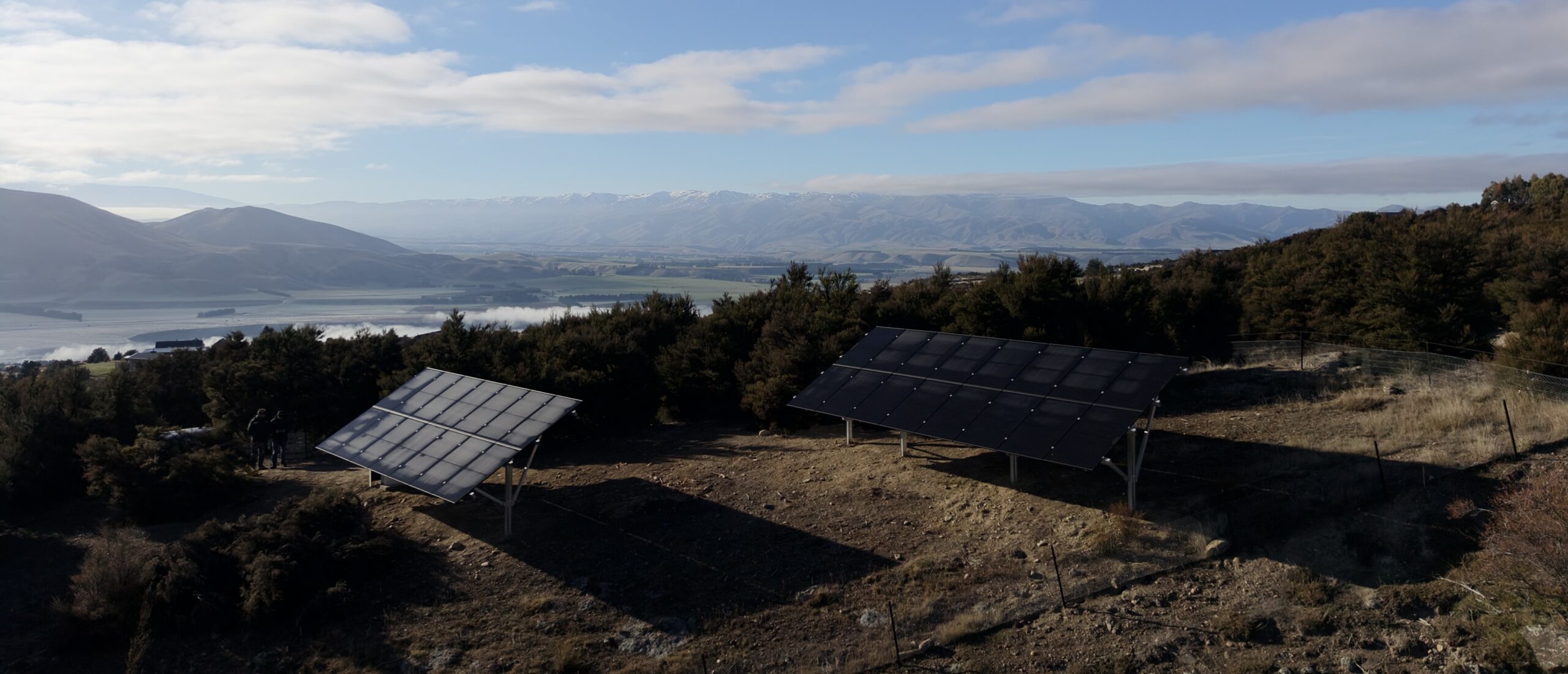
For many farms, the answer is yes.
The financial benefit comes down to how much of the solar power generated can be used on the property. Electricity generated on site is electricity that doesn’t need to be purchased from the grid, and excess generation exported back to the network typically earns a return.
This is where farms often have an advantage. Irrigation pumps, refrigeration, workshops and other equipment frequently operate during daylight hours, allowing farms to make use of a larger share of the solar power they generate. The more power that can be used on site, the greater the potential value of the investment.
That doesn’t mean every farm is the same. Energy demand, seasonal operations, site conditions and existing infrastructure can all influence the best approach. Understanding these factors is an important first step in determining whether solar is the right fit for your property and what a successful system might look like.
A farm and a family home use electricity in very different ways, which is why a farm solar system requires a different approach.
On a house, electricity demand is often highest in the morning and evening. On a farm, energy use is driven by day-to-day operations, whether that’s irrigation, pumping, refrigeration, processing equipment, sheds or workshops. Demand can be substantial and can vary significantly throughout the year.
Because of this, designing a successful farm solar system isn’t simply a matter of installing more panels. Every farm has its own operating patterns, infrastructure and energy goals. Understanding how and when power is used is just as important as understanding how much is used.
At Southern Solar, we take the time to understand how a property operates before recommending a solution. By analysing energy use, site infrastructure and future plans for the farm, we can help determine the system size and configuration that will deliver the best long-term outcome.
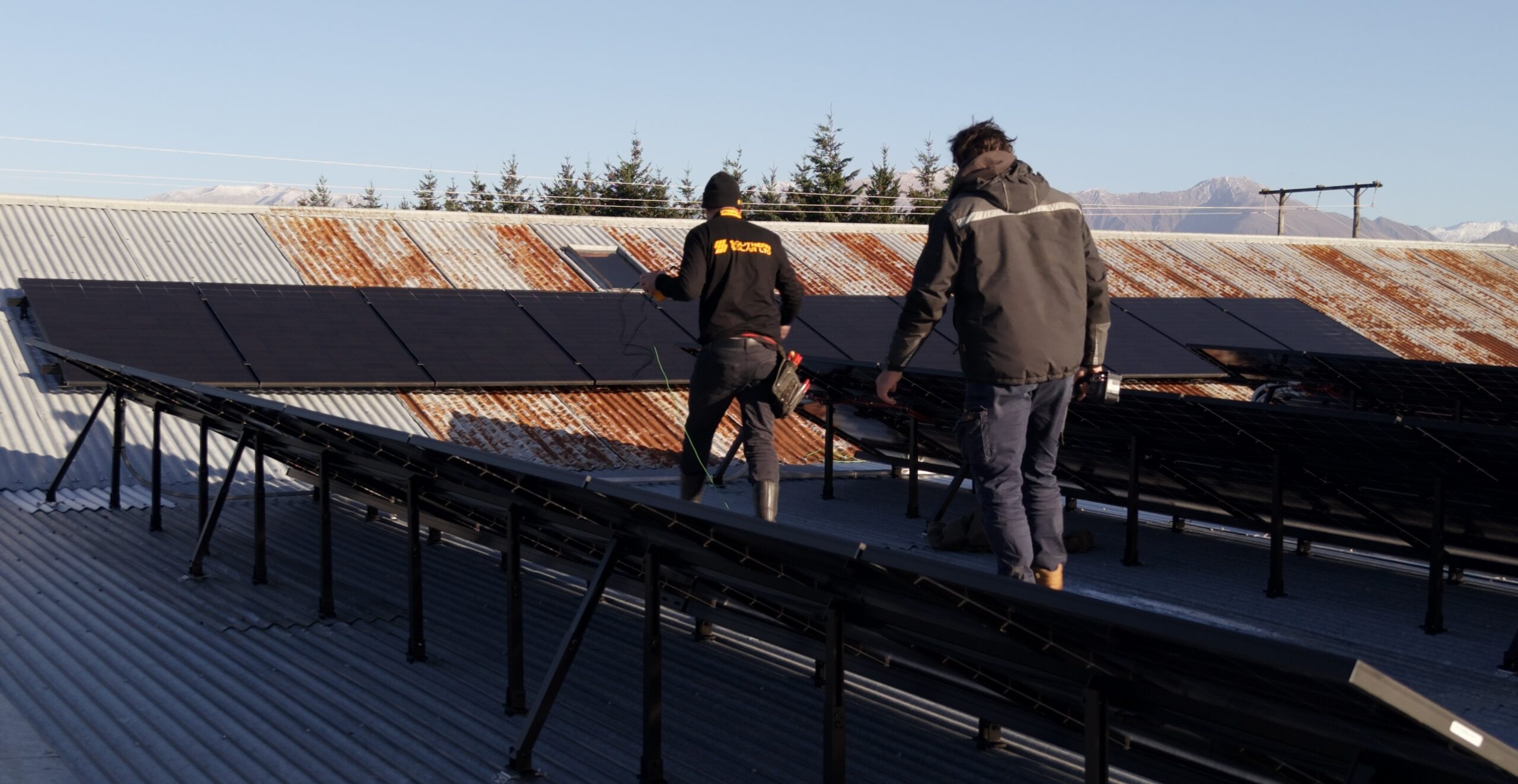
One of the first steps in assessing a farm for solar is understanding the property’s electrical infrastructure and how it connects to the local network.
Factors such as supply capacity, existing electrical loads and network requirements can all influence the options available. While these considerations are largely invisible to the farm’s day-to-day operation, they play an important role in determining what’s achievable and how a project should be approached.
This is where experience matters. Rural solar projects often involve considerations that don’t apply to a typical residential installation, and understanding these requirements early can help avoid costly surprises later in the process.
Our team manages this assessment from the outset, working through the technical requirements and liaising with the energy network providers. That means farmers can focus on running their business while we identify the most practical and cost-effective path forward.
While farm sheds can sometimes provide a good location for solar, they are not always the best option. Factors such as roof condition, orientation, shading and available space can all affect performance and long-term value.
Ground-mounted systems offer greater flexibility, allowing panels to be positioned where they can capture the most sunlight and accommodate larger system sizes. On properties with available land, this can often provide more options when designing a solar solution around the farm’s energy needs.
The right approach depends on the property, existing infrastructure and how electricity is used across the farm. That’s why site assessments are an important part of determining the best location and configuration for a solar system.
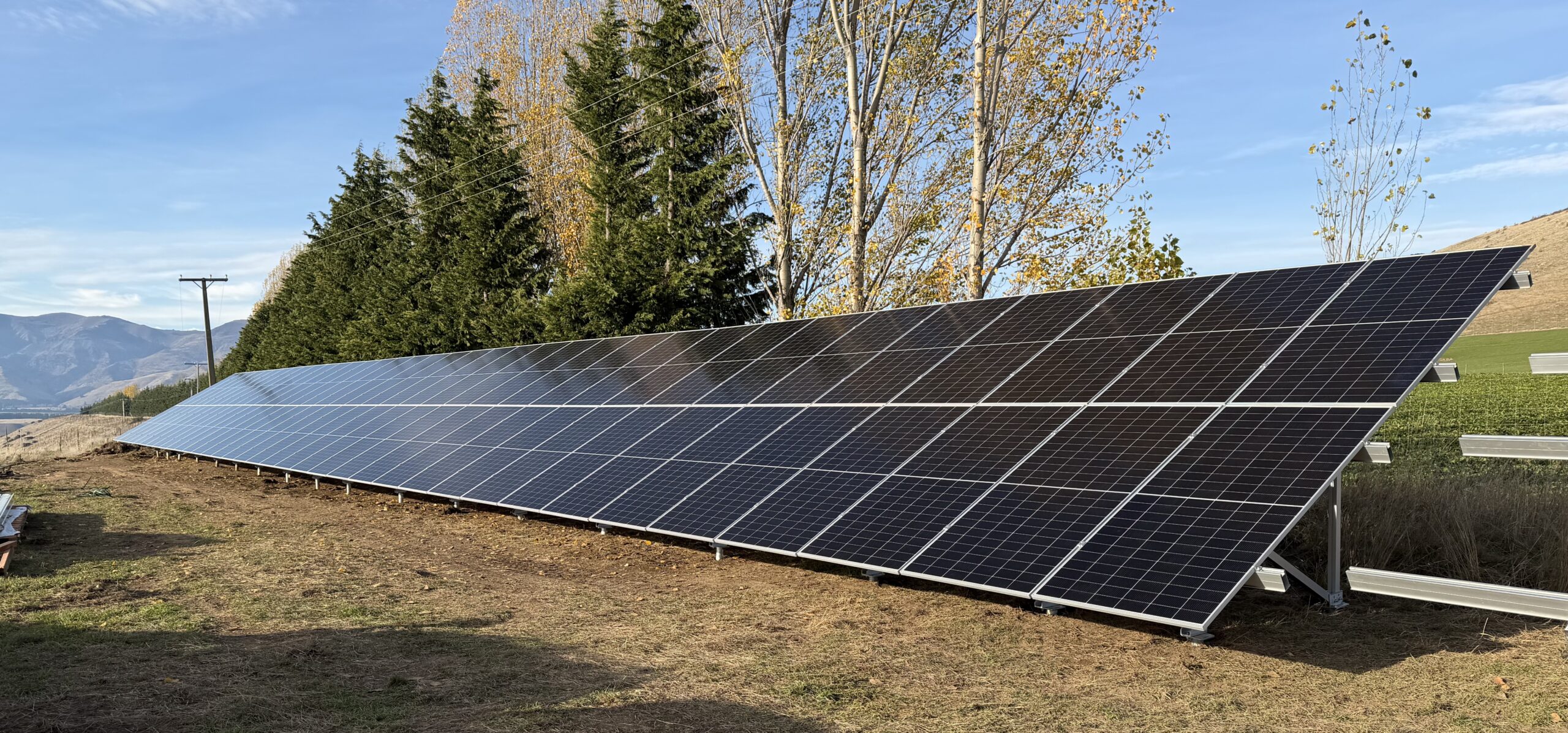
Unlike residential systems, farm solar installations need to be designed for a working rural environment.
Factors such as shading from shelterbelts and surrounding landforms, panel placement, access for machinery, and the movement of stock all need to be considered when determining the best solution for a site. Ground-mounted systems can also make use of technologies such as bifacial panels, which are particularly well suited to open rural environments.
The layout of a solar array is equally important. Considerations such as row spacing, fencing requirements and ongoing access for maintenance can all influence the performance and practicality of a system over its lifetime.
Taking these factors into account from the outset helps ensure a solar system not only performs well, but also fits seamlessly into the day-to-day operation of the farm.
Every farm system is priced around what is actually needed. There is no standard package that makes sense across an irrigation pump, a packing shed and a high-country station, because the loads have almost nothing in common. What is useful is knowing which variables move the number, because they are not all obvious:
The only way to get a real number for your own property is a proper assessment. That starts with your actual power bills and load profile, not a rule of thumb.
Is ground-mount solar better than rooftop solar for a farm? Not always, but it is very often the more practical choice. If your roofs are shaded, oddly angled, structurally unsuited to the weight, or not big enough for the system your loads need, ground-mount is often the best option.
How is a farm solar system sized differently to a house? The starting point is your biggest daytime load, usually irrigation, rather than a household consumption average. From there it is the same process at a larger scale, with the inverter sized to the loads running at once and the battery sized to what runs after generation drops off.
Do I need approval from the network company to install solar on a farm? Yes. Any grid-connected generation needs approval from the local network provider, and at farm scale the application will also set an export limit. Our team handles all necessary applications.
Is there a lot of red tape to deal with for a farm solar installation? There are the necessary applications and compliance checks to undertake. However, we handle all of that for our customers, and with the long-standing relationships we have with the retailers and network providers, we are able to get this done quickly and correctly.