
Part of our winter solar series. Is Solar Worth It in Winter in Central Otago?
It’s a fair question in a region where winter mornings are often below zero and short days mean the evening chill arrives early. Does the cold actually hurt your solar panels? No, it doesn’t. In this article we take a look at how solar technology works in the cold, and why it’s good news if you’re weighing up solar in Wānaka or Central Otago.
Solar panels are built to handle far harsher conditions than a Central Otago frost. They’re tested and rated for extreme temperature ranges, from well below freezing to well above what our summers produce, and the materials, tempered glass, aluminium framing, sealed junction boxes, are designed for decades of outdoor exposure in exactly this kind of climate. Cold weather on its own poses no risk to panel lifespan or warranty.
This surprises most people. Solar panels are semiconductors, and like most electronics they perform a bit better in cooler temperatures. Heat increases electrical resistance within the cells, which slightly reduces output. So on a cold, clear Central Otago day, your panels can produce electricity more efficiently per hour of sunlight than they would on a hot summer afternoon.
In cold weather, a panel’s electrons flow more cleanly, so it converts a slightly higher share of the sunlight hitting it into usable electricity. Most panels are rated to perform best around 25 degrees, and lose roughly 0.4 percent of their output for every degree above that.
That said, summer is still your biggest generation season. Longer days and a higher sun angle mean far more total sunlight hits your roof, easily outweighing any small dip in efficiency from the heat. In winter, panels are slightly more efficient per hour in the cold, and in summer you simply have a lot more hours to work with.
That’s why a crisp, sunny winter’s day, even with a heavy frost overnight, can turn out to be a strong generation day. The limiting factor in winter isn’t the cold. It’s simply having fewer daylight hours and a lower sun angle to work with.
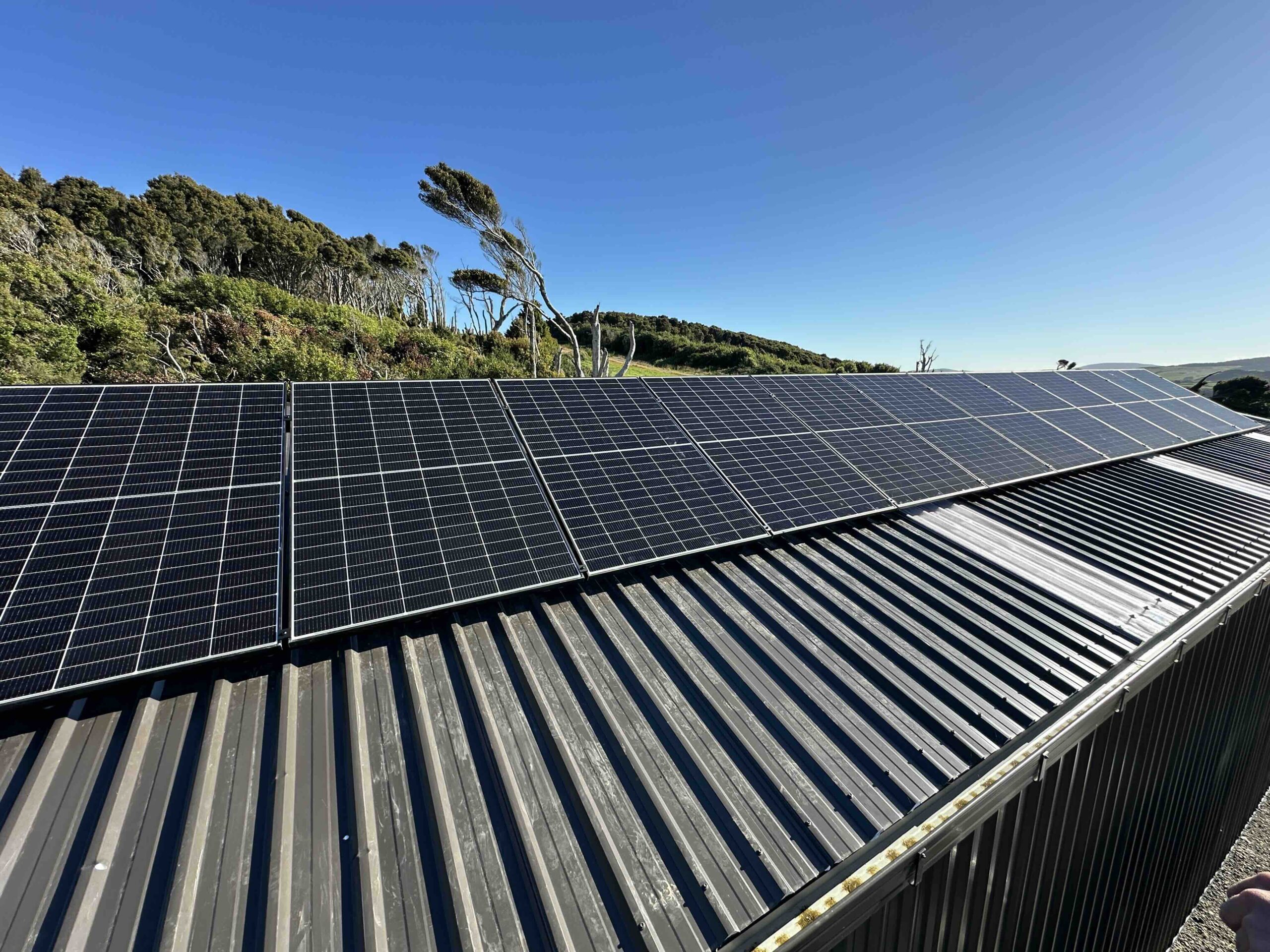
Light snow and frost are rarely an issue. Panels are installed at a tilt specifically so snow, frost, and rain shed off the smooth glass surface rather than sitting there. Their dark surface also absorbs heat from any sunlight that does get through, which speeds up melting and sliding compared with, say, snow sitting on a roof tile.
Heavier, prolonged snow cover is the exception. A thick blanket that fully blocks the panel surface will stop generation until it clears, but in the Wānaka and Central Otago context this tends to be a short, occasional event rather than a defining feature of the season, and it sorts itself out once the sun returns.